
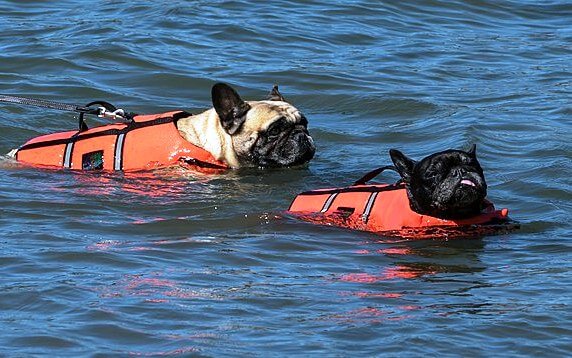
How Do You Introduce a Dog to Swimming?
Well, unlike human beings, dogs have this innate ability to swim. Thus, teaching it how to swim should be much easier than teaching a child how to swim.
With an annual estimation of more than 10K dogs dying from drowning in the USA, you can see why you need to train your dog to swim.
Besides, sometimes dogs make better swimming companions than even people! If you do not have a friend to swim with, well, you can swim with man’s most faithful friend.
Some breeds take to water more easily than others. But at the same time, you still need to train him or her how to swim. Do not think that they will learn automatically.
Why you should teach dogs to swim
The benefits of swimming everyday for human beings include the following:
- High-quality aerobic activity
- Good for the health of your joints
- It is very good for weight loss
- Swimming helps to tone your muscles
- Swimming works many muscle groups in your body
- It can save you from drowning
There are many more benefits. Now, when you know how to teach a dog to swim in a pool, these are some of the benefits that it will enjoy.
If your dog is fat, he needs to lose some of that weight. You can help train a dog to swim and then get him to swim with you every day.
Sometimes, dogs exhibit a lot of energy after eating and resting. They will not let you rest until you take them for exercise or play. If you would like to channel the excess energy to a helpful aerobic exercise, train a dog to swim.
Teaching a dog how to swim also helps to improve his joint health. Let’s just say that your dog will enjoy almost the same benefits from swimming that humans enjoy.
Finally, dogs have been known to rescue other dogs, puppies, children, and human beings from certain situations. Thus, the more your dog knows, the better!
You never know when his skills in swimming can come in handy. Besides, when you are swimming in the ocean, a dog can make a great companion.
Personally, I have seen a man swim for about 2 KM in the ocean in Mombasa, with his dog.
How Do You Teach A Dog To Swim?
Now that we know the benefits of teaching a puppy to swim, we need to get into the actual training. Here are certain things that will help you teach a dog how to swim faster and more efficiently:
Equip your dog to swim
Some dogs learn how to float naturally, but others do not. For instance, if you are training a pit bull, you should know that such breeds sink easily.
Sinking in water can be a confidence-breaker in your dog. Irrespective of the dog breed that you are training to swim with, you should equip it with the right gear.
Get a life vest for dogs and get your dog to wear it. You can also get a life jacket for dogs, such as the Queenmore Dog Life Jacket that you can buy on Amazon.com.
A life jacket will help your dog to float and keep his head out of the water. If water gets into the eyes or ears of the dog, he will become disoriented and will lose their focus.
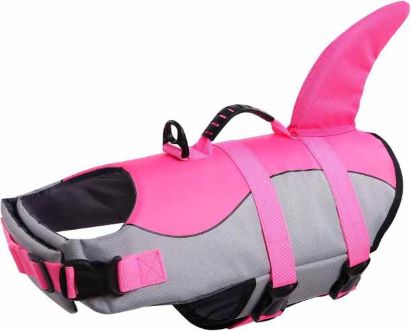
You also need to keep your dog leashed. You do not want your dog swimming or splashing too far from you. Also, the leash lets the dog know who is the boss, which is important for training.
How to get your dog to like swimming
To start, you have to get your dog to love water. Some dogs just don’t like swimming or anything to do with water. However, you can get the dog to love swimming in the pool.
Just as we do with human beings, start training your dog how to swim from the shallow end of the pool. Since dogs love children, you can get him or her to get into the water with your kids in the shallow end.
That way, he gets used to being submerged in water, which is the first very important lesson in swimming.
If the dog does not want to get into the water, throw his favorite toy in the pool. You can then get him to come after you with a leash. Once the dog sees you in water, he knows it is safe.
Sometimes, using a toy to get your dog to like water might not work. If that fails, get into the water with his favorite bite or treat.
You can then call him to come into the pool and get it. All this time, you should be holding his leash (a long one is preferable) so that he does not panic and bolt.
Start with walking in water
Start with walking in the water rather than swimming. For the first lesson, tread in water in the shallow end, and then back out with your dog. Walk in again until the dog gets used to the water.
Of course, how to train a dog to swim requires you to be prepared in your swimming attire. At first, your dog might not like the idea of walking into the water.
Thus, you have to use a cajoling voice. You have to use endearments to get the dog to come after you. You should never throw the dog into the water, as that will scare his wits.
Will your dog learn to swim on the first day? It won’t happen. But if you can just get him to walk in and out of the water, that should be enough for the first day.

Getting your dog to actually swim
From walking into the water, you should now get your dog to actually swim and learn how to paddle.
Once the dog learns how to float in the water, it is time to get him to start moving his legs to kick. Of course, most dogs start to paddle with their front legs. You have to encourage the dog to paddle with the hind legs.
To do that, you just have to provide a supporting hand under the belly. You can left the dog a little on the rear so that he starts paddling his hind legs. You have to be patient.
Also, watch the body language of your dog. If he seems disoriented, you should take him out of the water.
Train your dog with other, more experienced dogs
If you have a friend or family member who has a dog who already knows how to swim, you can ask them to bring their dog over.
Get the dog acquainted with the swimmer dog and then take both of them to the pool. This is an excellent trick for making dogs like water. Once he sees the other dog confident and enjoying the water, he will want to go after him.
This will make your work much easier.
Treat the dog after every swim
Once you have had a successful introductory lesson in the water, you should reward your dog with a treat. He will learn to associate the exercise with treats, and with time, he will look forward to the training sessions.
Along the same lines of treating your dog to something they love after a successful session, you also need to know how to show your disappointment.
In this regard, first, you should never shout at your dog! If he is doing something you do not like in your dog training session, show your disappointment gently but firmly. Dogs have emotions! According to Modern Dog, dogs experience anger, fear, disgust, joy, and others.
Clean him after the pool session
After knowing how to get your dog to swim in a pool, you need to know how to clean up after a swimming session.
Follow the swimming lesson with a cleaning and shampooing session. You want to clean out the chlorine from his fur.
Feed him and release him to take a rest. This will get him to associate your good deeds with swimming. In the future, he might look forward to swimming.
How Do You Teach A Dog To Swim: FAQ
There is much more involved in how to teach your dog to swim in a pool. Here, we have just shared the most important guidelines. In this section, we will find out the questions that most people ask when they want to know how to teach a dog to swim:
How long can dogs swim?
The best swimming time for your dog is 10 minutes per session when you are training him. However, after he has learned how to swim in the pool, keep the sessions to a maximum of 20 minutes to avoid water toxicity.
Do German Shepherds swim?
Yes, they can, but not naturally. You have to train your German Shepherd to swim. The good thing is that they are athletically inclined, so they learn how to swim fast. They also seem to love swimming once they know how.
Do dogs use their back legs when swimming?
Dogs use the hind legs for propulsion in the water and the front legs for changing and maintaining direction.
Even if you might not see if the dog is using the hind legs, he actually uses them. When training the dog to swim, he might not learn to use the hind legs immediately, but he will eventually get around to it.
How long does it take for dogs to drown?
Drowning is death by water inhalation. Therefore, it will not happen immediately. When your dog inhales just 3 ML of water for every kilogram of his weight worth of water, he can take up to 24 hours to show signs of drowning.
If a dog inhales at least 4ML of water for every 1 KG of his weight, he can drown in less than an hour.
How can I get my dog to like water?
Toss a small toy the dog likes in the water, and then encourage him to go after it. You want this to be a toy that he can pick up with his mouth, and it should be a floatable one.
If the dog does not go after the toy, try using their favorite treat or bite. Just make sure that it won’t sink or soak in water.
What do you do if your dog doesn’t want to swim?
If your dog does not want to swim, you can do a few things. First, you can outfit him with a dog life jacket or vest.
You can then carry him to the water and set him on it. Once he floats, he starts to feel comfortable in the water.
You should also talk to him in an encouraging tone all the time and hold the leash to control him. Make the first session short, and once you get out of the water, reward him with a treat.
Why is my dog scared of swimming?
Nervousness is one of the main reasons your dog or puppy is afraid of the swimming pool. Thus, you can start taking him to the poolside so that he can get used to seeing people and perhaps other dogs in large amounts of water.
Should I throw my dog in the water?
If the training session is becoming too hard and taking too long, you might lose your cool. But you should never throw your dog in the water. First, the dog might experience cold water shock – it’s a thing, you know.

Secondly, you will traumatize the dog a great deal, and from then on, he is going to be very afraid of water. If you toss the dog in the water, that might as well be the last time he will ever want to be near water.
Conclusion
How do you teach a dog to swim, and how long should it take?
The secret is to get your dog to like the water. You have overcome the first hurdle. Now, make the first sessions short and fun, and reward your dog with a treat.
Be very patient with your dog. Shouting at him or throwing him in the water might traumatize him. It can also make him forever afraid of water.
If you are training a Maltese, Chihuahua, Pug, Yorkshire Terrier, or Pekingese, be extra patient with them because they naturally do not like to swim.